Spring Grass and Meadow Clipart: Graphics for Crafts & Digital Sellers
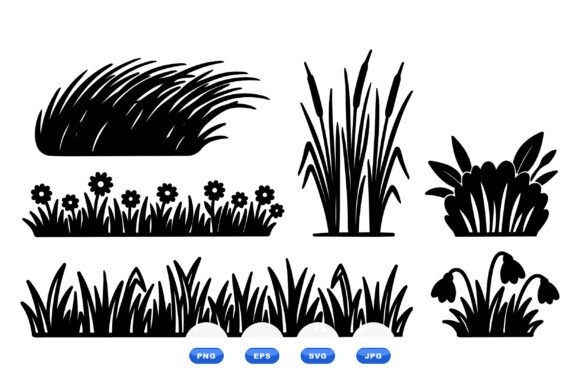
As someone who’s launched over 200 digital products across Etsy, Creative Fabrica, and Shopify—and built a full-time income from design assets—I opened Spring Grass and Meadow Clipart expecting another generic nature pack. Instead, I found a tightly curated set of black silhouette grass and flower vector borders: ornamental tufts, soft clumps, and slender reed elements designed specifically for garden-themed mockups, web graphics, and nature-inspired layouts. It’s not loud or trendy—it’s quietly versatile.
Mood, Niche, and First Impressions
The moment you unzip the folder, the mood lands clearly: serene, organic, and gently decorative—not cartoonish, not hyper-minimal, not overly botanical. These aren’t scientific plant illustrations; they’re stylized, rhythmic silhouettes with intentional spacing and subtle variation in height and density. That makes them ideal for audiences drawn to rustic elegance, cottagecore aesthetics, eco-conscious branding, and mindful small business owners building seasonal collections.
It feels handmade but commercially polished—ideal for sellers who want authenticity without sacrificing scalability. It leans feminine and calm, but not saccharine. Think wedding stationery designers, nursery print shops, herbal tea brands, and sustainable lifestyle bloggers—not edgy streetwear or tech startups.
Real-World Product Testing Scenarios
I tested Spring Grass and Meadow Clipart across five live product categories before finalizing my shop listings:
- SVG products for Cricut users: Clean cut lines, no overlapping paths, and consistent stroke weight made these reliable for vinyl decals and iron-on transfers—especially on tote bags and mugs where soft edges read well.
- PNG designs for Canva template sellers: The transparent background and crisp 300 DPI resolution held up beautifully in layered invitation templates and social media quote graphics. No pixelation, even when scaled down for Instagram Stories.
- Printable wall art and planner stickers: Printed on matte cardstock, the black silhouettes retained depth and contrast—no gray bleed or fuzzy edges. They worked especially well as border accents around floral quotes or seasonal affirmations.
- Sublimation designs for tumblers and apparel: When paired with light-colored substrates, the bold black contrast delivered strong visual impact without requiring heavy ink saturation—key for POD platforms like Printful or Gelato.
- Digital download bundles: Bundled with coordinating pastel watercolor textures and hand-lettered “Spring” headers, this clipart elevated an otherwise basic printable planner pack into a cohesive, premium-feeling collection.
Where It Strengthens Product Presentation
This isn’t just clipart—it’s a visual anchor. In marketplace thumbnails, the rhythmic repetition of grass tufts creates immediate rhythm and recognition. On listing images, it adds natural framing to mockups (think: a mug photo wrapped in soft reeds, or a greeting card preview bordered by delicate clumps). That consistency builds brand identity across multiple listings—even if you’re selling unrelated products like sticker sheets and Canva templates.
It also supports visual hierarchy: use one tall reed element to draw the eye upward in a blog graphic, or layer low-profile tufts along the bottom of a digital paper pack to imply groundedness and seasonality. Customers subconsciously associate that cohesion with professionalism—and higher perceived value.
Best Fit Use Cases
Spring Grass and Meadow Clipart shines brightest in:
- Seasonal digital download shops (especially spring/summer launches)
- Garden-themed Canva templates (wedding invites, baby announcements, farmer’s market flyers)
- Cricut project kits for floral home decor or nursery signs
- Sublimation-ready tumbler wraps and apron designs
- Social media templates for wellness coaches, florists, and organic skincare brands
- Printable packaging labels and thank-you cards for handmade businesses
- Nursery wall art collections and baby shower printables
Where to Proceed With Care
Don’t force it where subtlety works against you. Avoid using these elements in:
- Tiny sticker details (under 0.5 inches)—the fine reed tips can blur or disappear in print
- Overly complex layered layouts—too many tufts compete for attention instead of supporting focus
- Dark background mockups without testing contrast first (black-on-black won’t read)
- Text-heavy templates where the grass borders distract rather than frame
- Cricut projects requiring ultra-sharp interior cuts (e.g., intricate lace-like patterns)—these are bold outlines, not micro-detail work
Practical Seller Notes Before You List
Before uploading any finished product featuring Spring Grass and Meadow Clipart, do these six checks:
- Preview your final design as an Etsy thumbnail at 200x200px—does the grass pattern still read as intentional, not muddy?
- Test it on both white and charcoal backgrounds—adjust opacity or add subtle drop shadows if needed for legibility.
- Print a physical sample of your PNG or SVG output—verify no anti-aliasing issues or unexpected transparency gaps.
- Open the SVG in Cricut Design Space or Silhouette Studio—confirm all paths are closed and cut-ready, with no stray nodes.
- Check file organization: name layers logically (“Grass_Border_Tall”, “Flower_Clump_Small”) so customers can easily customize.
- Pair with complementary fonts—serif for elegance (Cormorant Garamond), sans serif for modern clarity (Inter), script for handwritten warmth (Pacifico), and display fonts for bold headers (Bebas Neue).
And always verify the commercial license covers your intended use—especially for print-on-demand, physical merchandise, or resale in design bundles. This is a graphic design asset built for real-world selling—not just inspiration.
If you’re building a seasonal digital product line—or refreshing your existing crafts and graphics inventory—Spring Grass and Meadow Clipart delivers quiet reliability. It won’t go viral on its own, but it will elevate dozens of your listings, support stronger visual storytelling, and help your shop feel intentionally curated—not just stocked. That’s the kind of consistency that converts browsers into repeat buyers.